
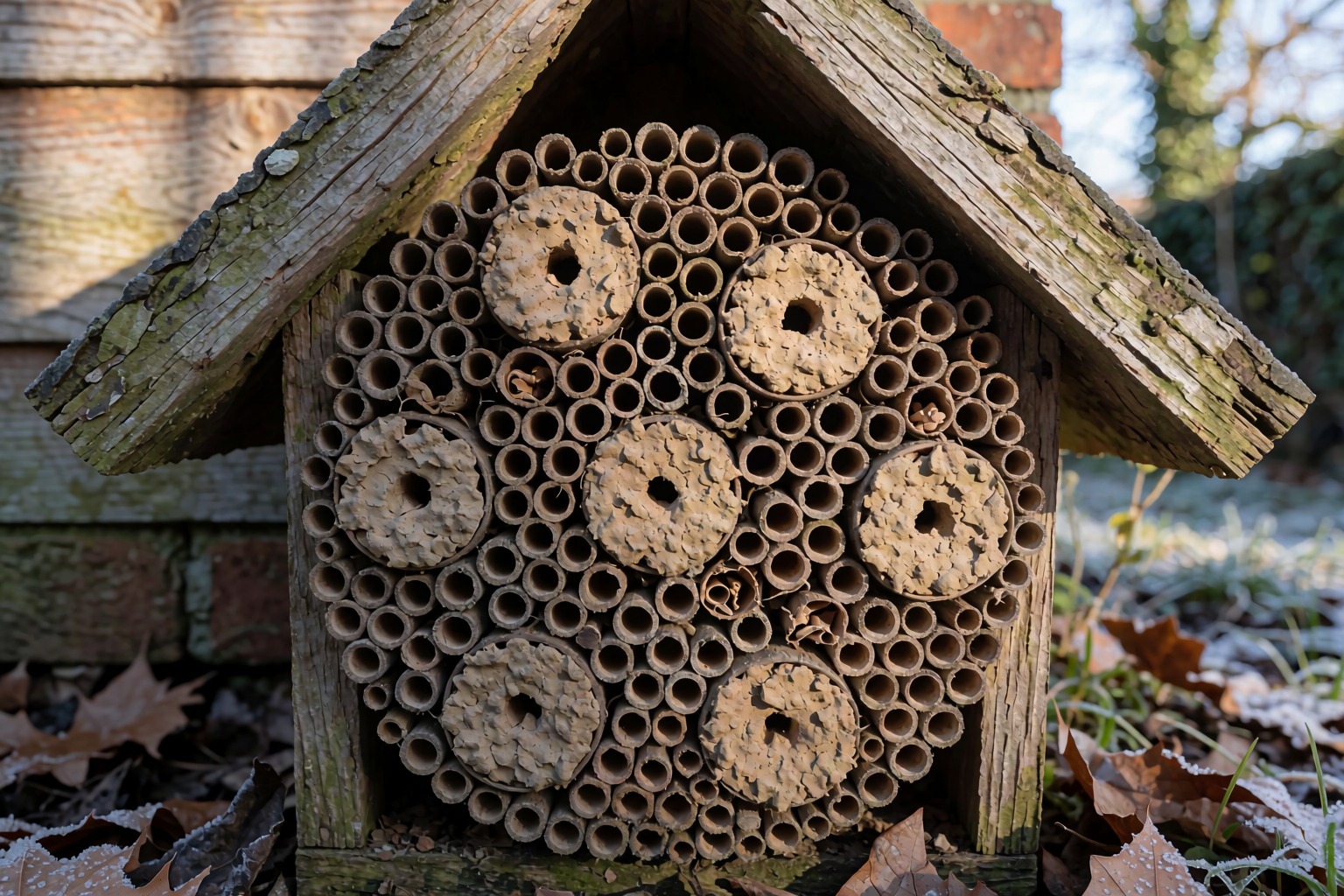
A filled bee hotel is not an empty box over winter. Here is what is actually inside it, how to keep it safe from damp and birds until spring, and roughly when its bees will appear again.
Read more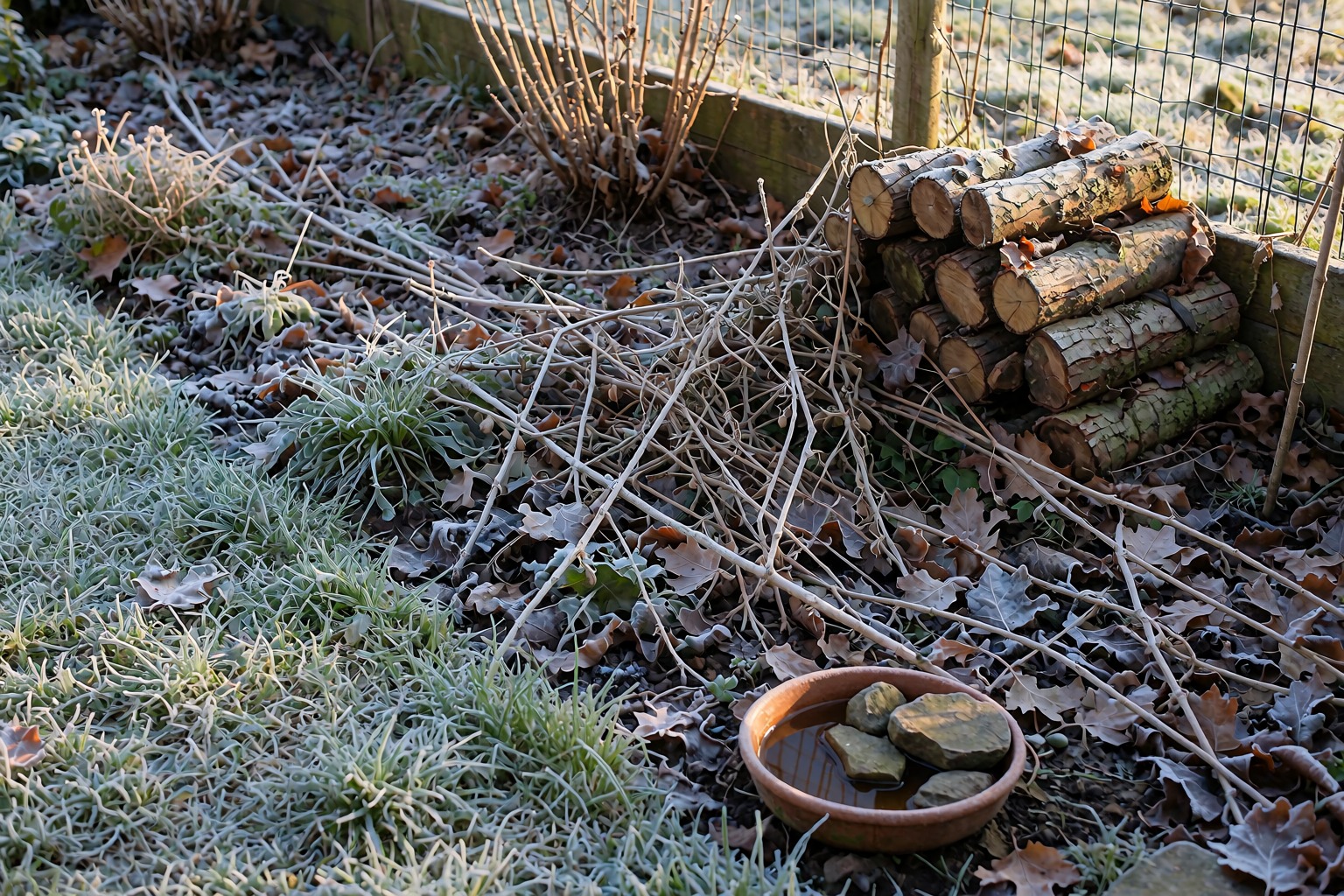
How to Help Bees in Your Garden Through Winter
Honey bees do not hibernate and bumblebee queens spend winter underground alone, so a garden that helps either one needs shelter, a reliable drop of water and a few flowers either side of the coldest months. Here is what actually makes a difference between November and February.
Read more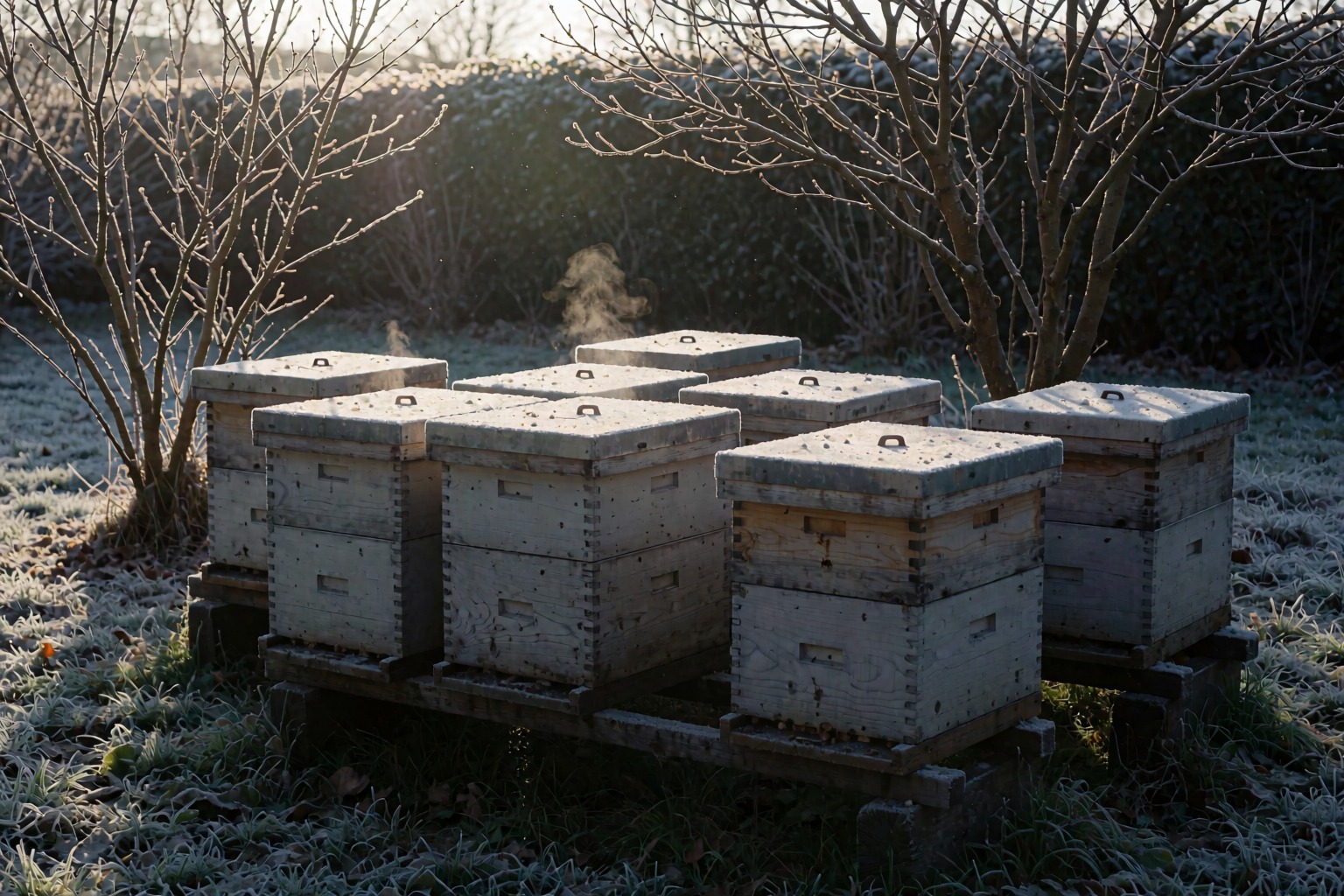
Winter in the Honey Bee’s Year
A honey bee colony does not hibernate. It huddles, shivers and waits for the first pollen, while the beekeeper mostly keeps out of the way. This is what winter really looks like in the UK and in temperate North America.
Read more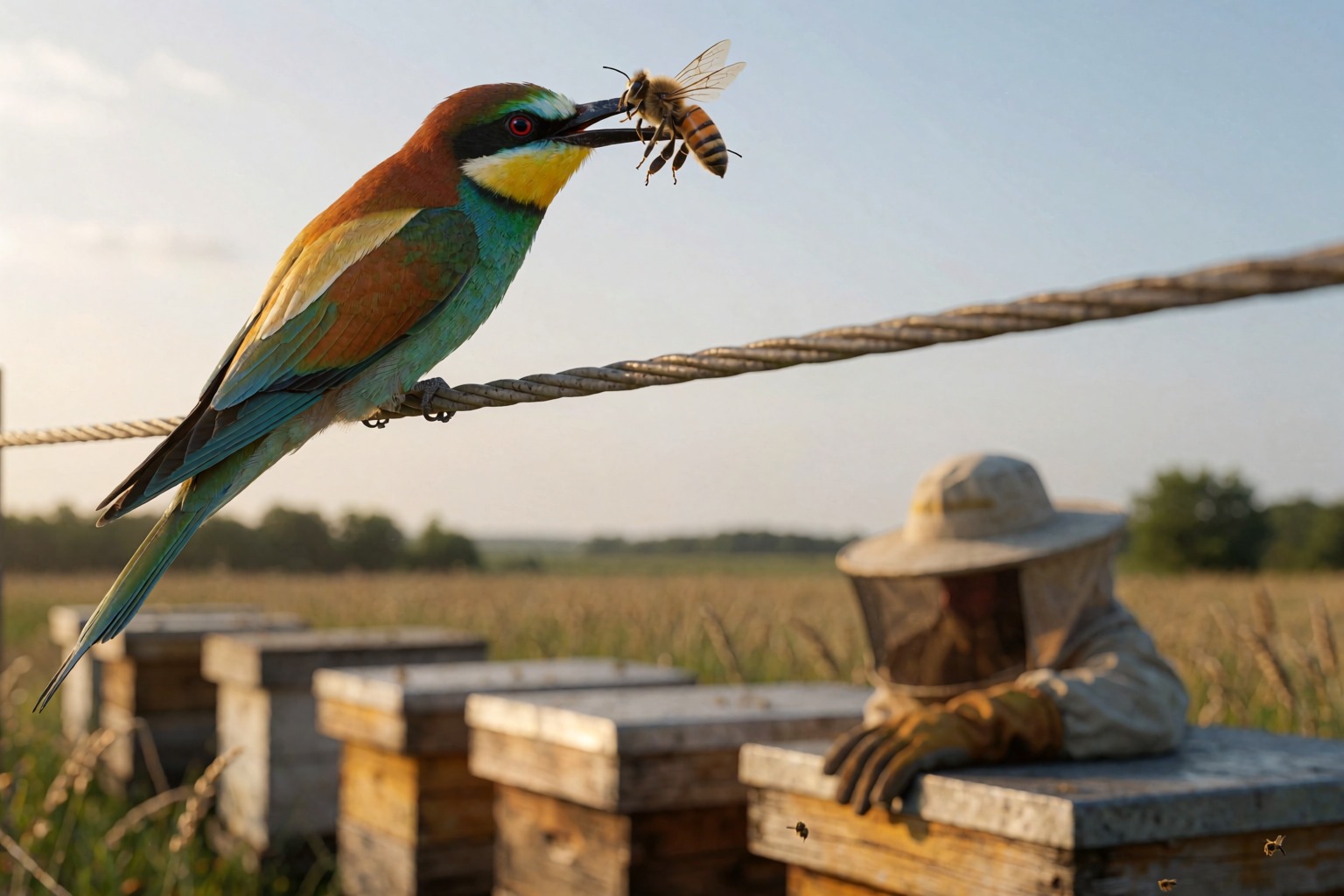
The Bee-Eater and the Honey Bee, Plainly Told
The bee-eater is a brightly coloured bird that catches bees and wasps in flight. Here is what it is, where it lives, what it takes from an apiary and how bees and beekeepers live alongside it.
Read more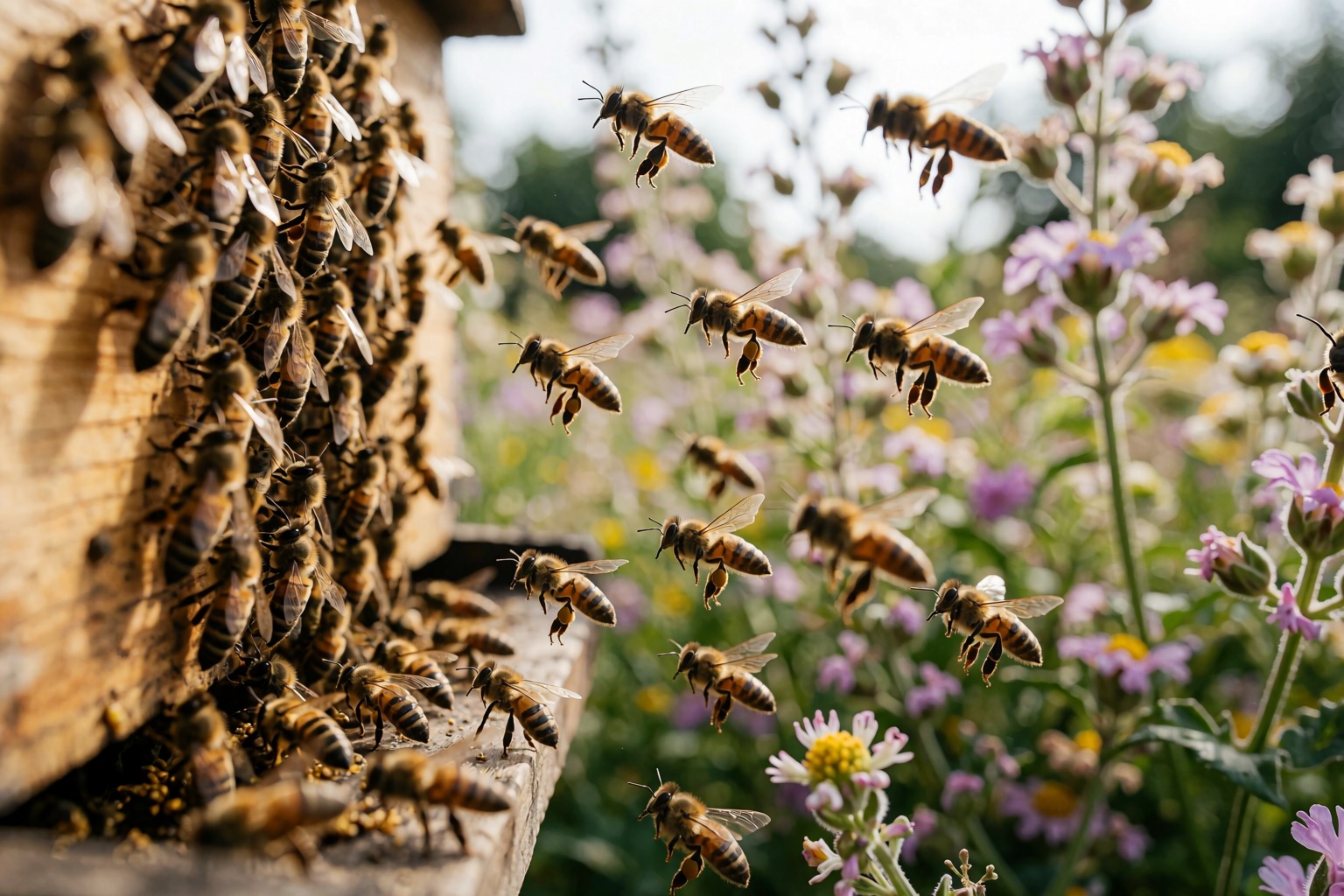
Summer in the Honey Bee’s Year
Summer is when a honey bee colony is at its largest and busiest. Here is what happens inside the hive, what the bees are working on, and what a beekeeper does, in the UK and in temperate North America.
Read more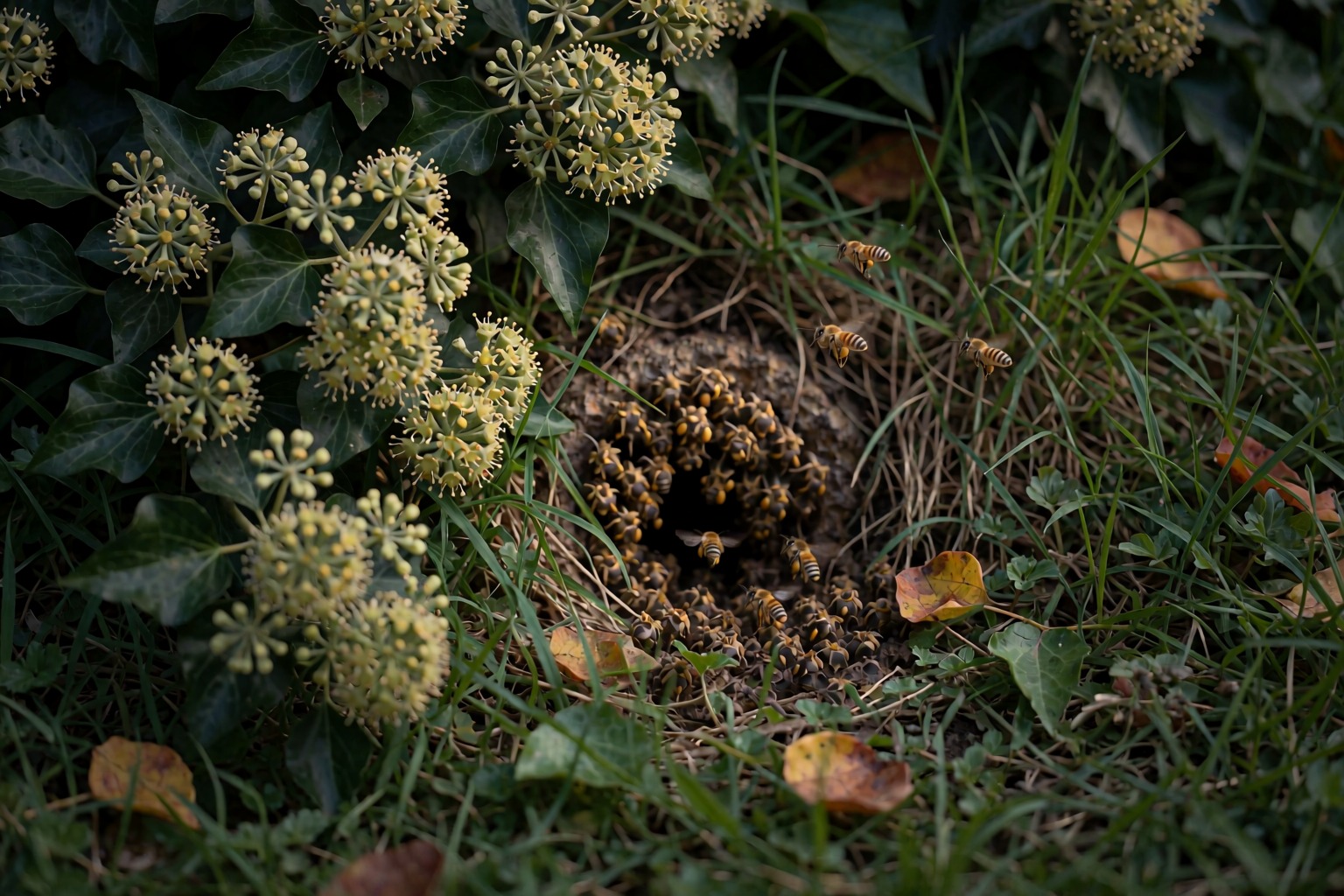
How a Honey Bee Colony Spends Autumn
Autumn is when a honey bee colony stops growing and starts preparing to survive. Here is what happens inside the hive, what still flowers, and what the beekeeper does, in the UK and in temperate North America.
Read more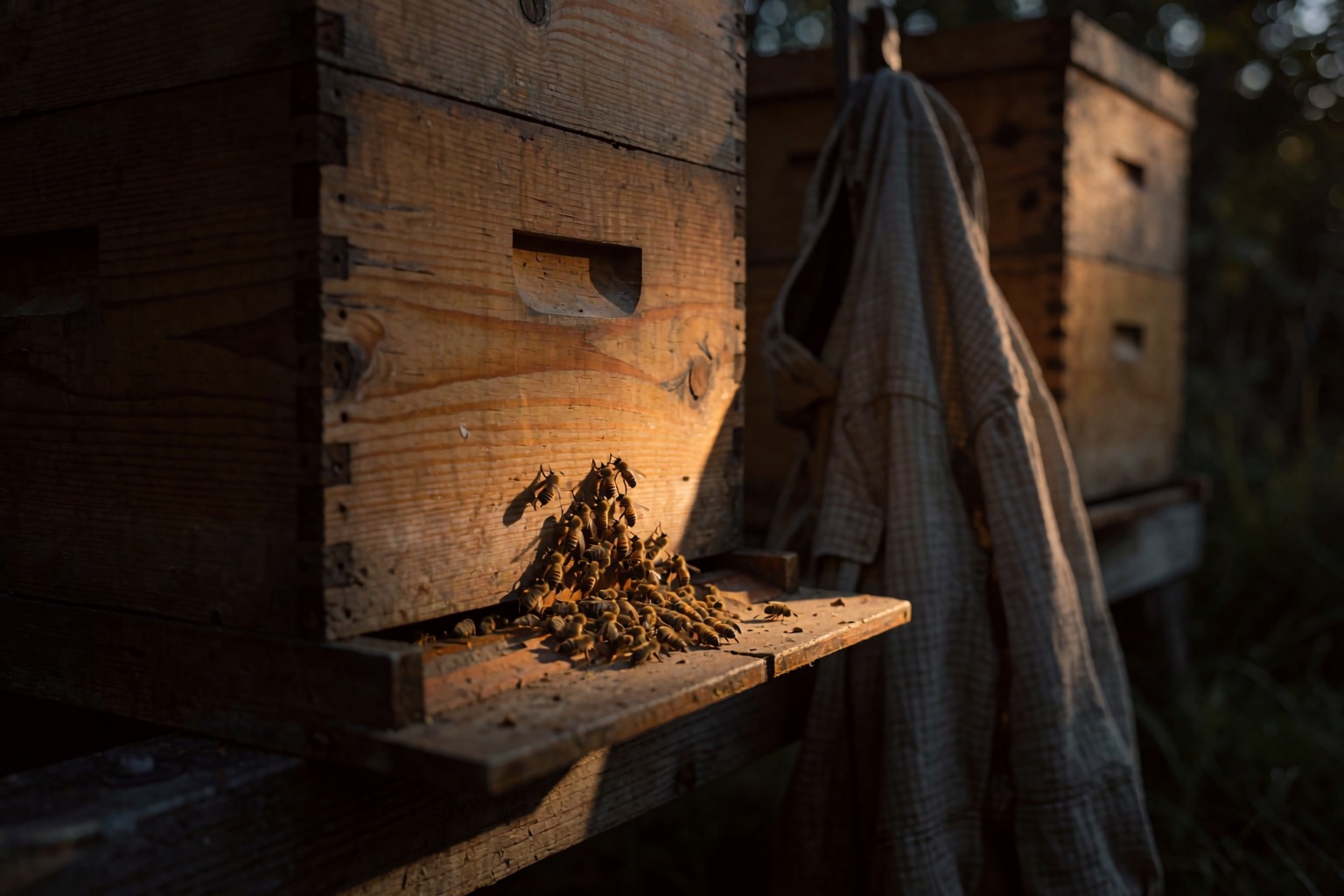
The Death’s-Head Hawkmoth and the Honey Bee
A large migrant moth with a skull-like mark on its back, known for slipping into hives to take honey. Here is what it is, where it turns up, and how bees and beekeepers cope with it.
Read more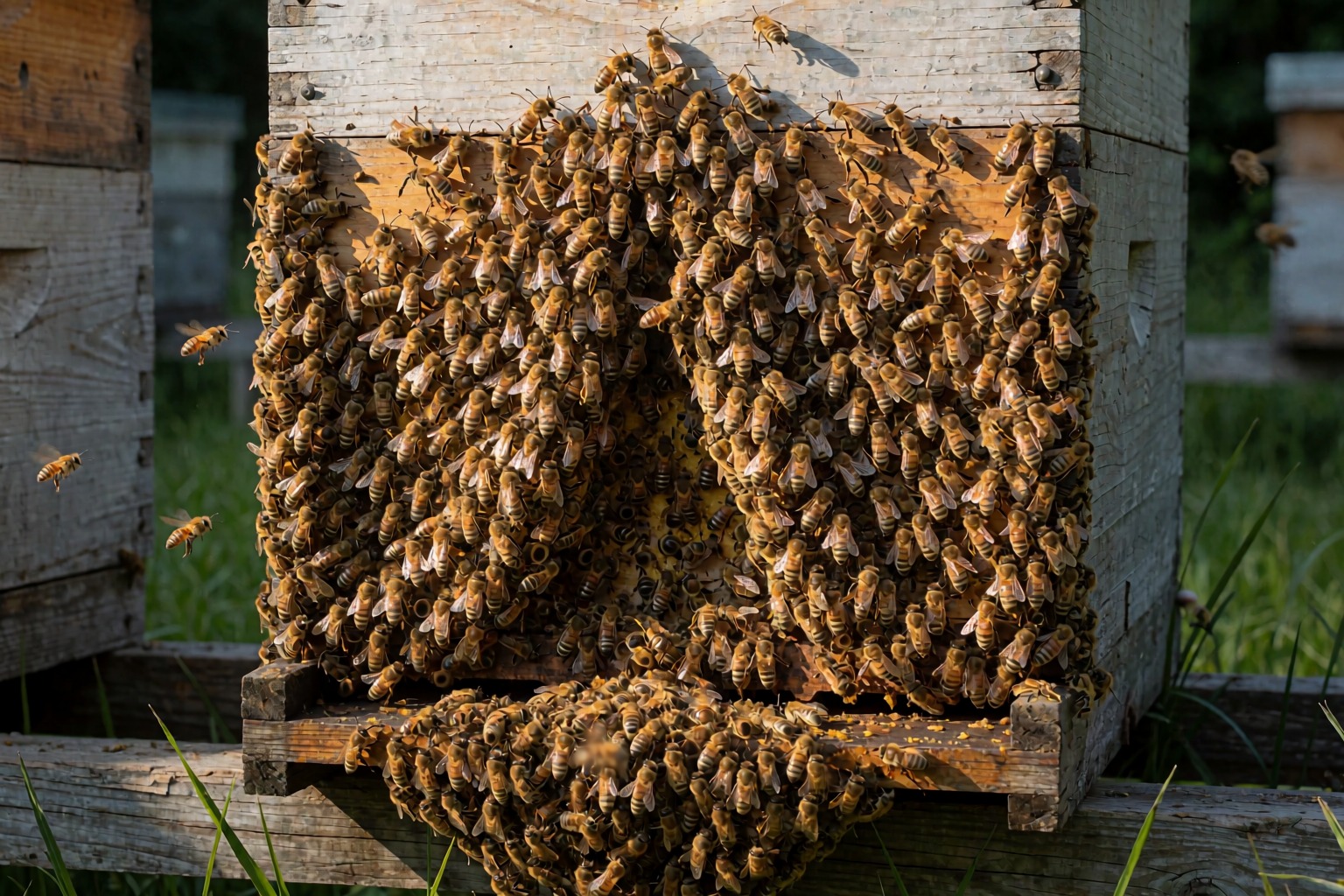
Why Honey Bees Hang Outside the Hive in Summer
On a warm evening, a great curtain of honey bees can hang from the front of a hive. It is called bearding, and it is a colony solving a problem of heat and space, not a colony in trouble.
Read more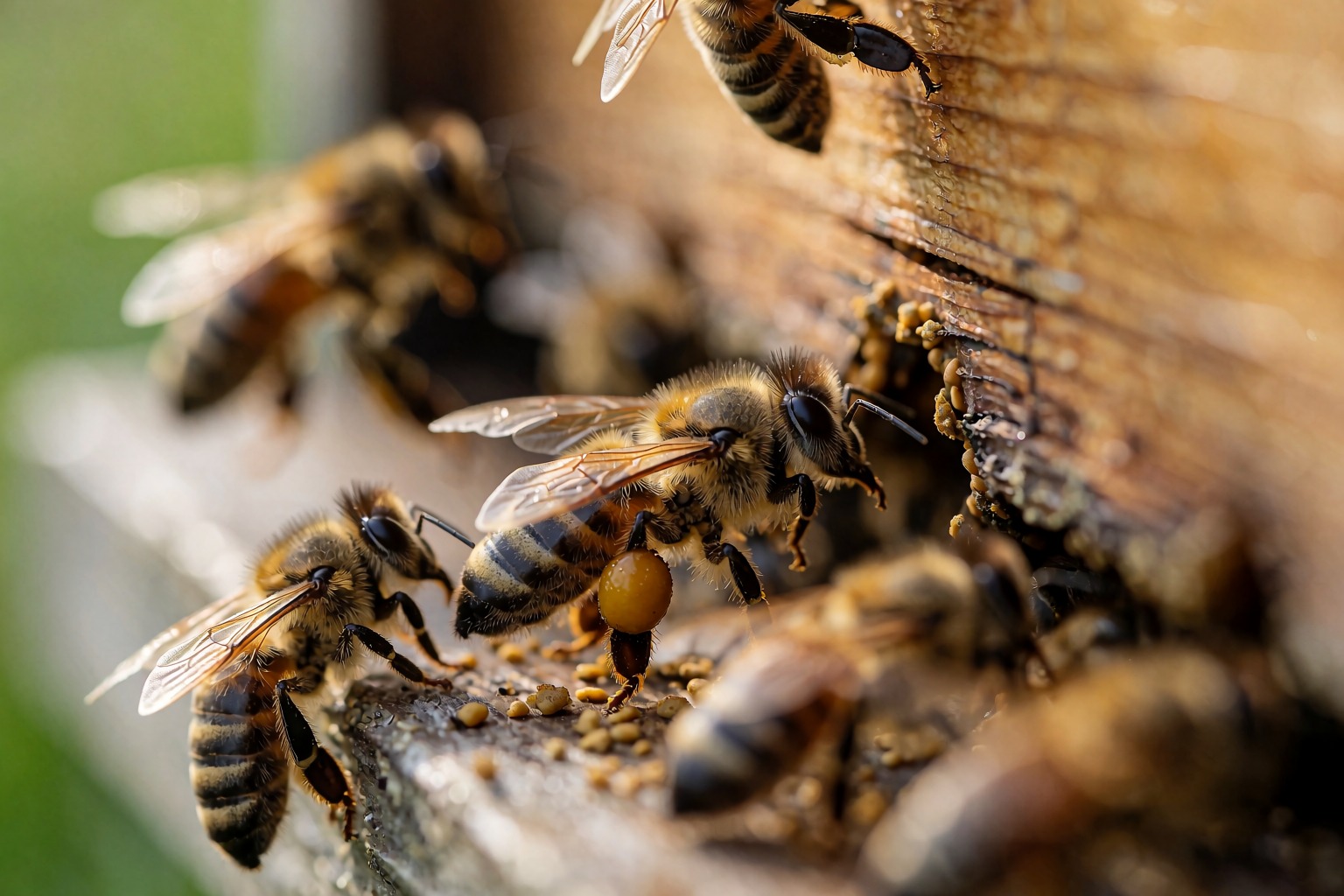
The Western Honey Bee and How a Hive Really Works
The western honey bee, Apis mellifera, is one species among more than 270 bees in Britain, yet it lives in a way no other bee does. Here is its natural history, from the waggle dance to the mite that changed beekeeping.
Read more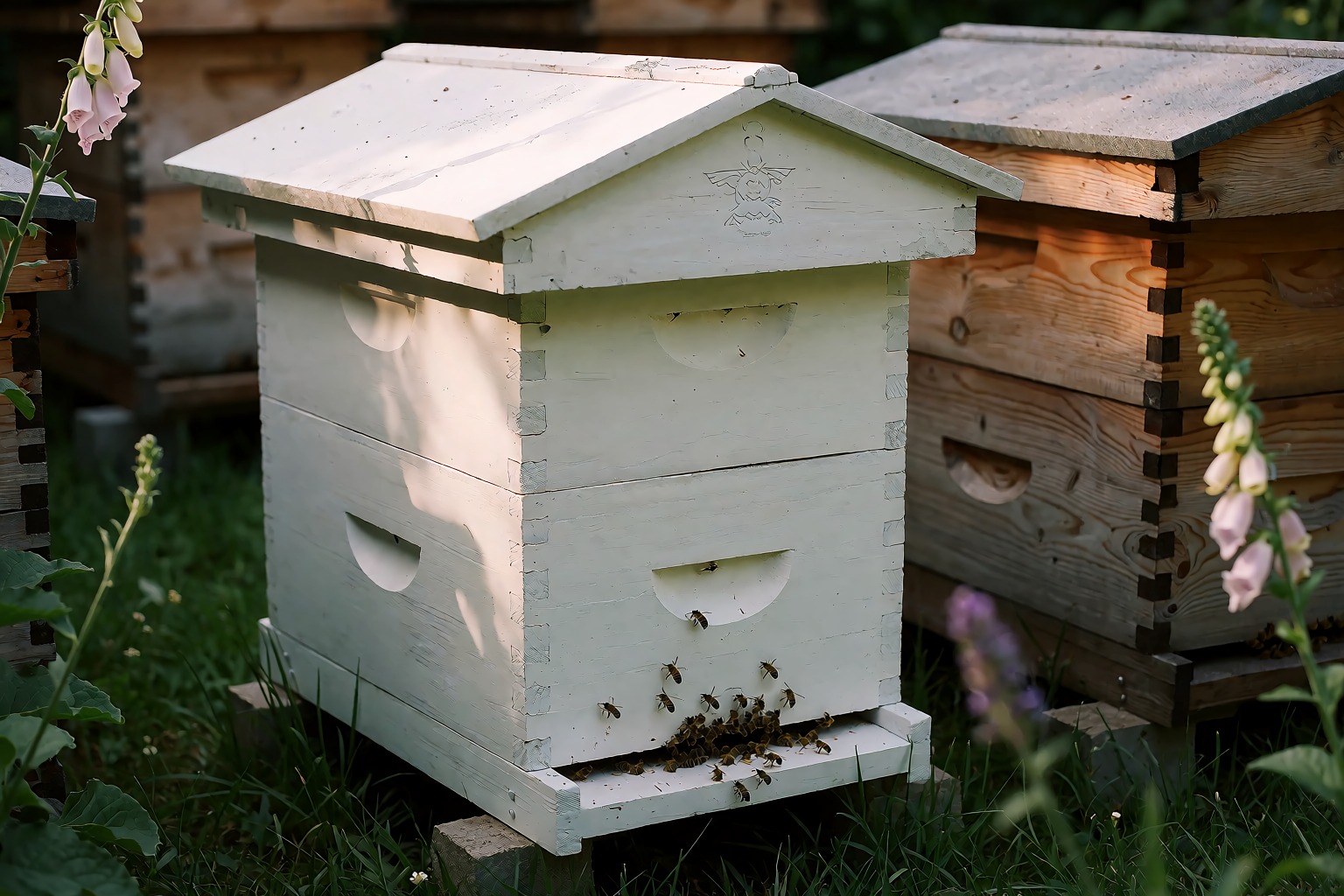
The WBC Hive and Its Place in Beekeeping History
The white, gabled WBC hive is the beehive of English gardens and picture books, yet it was designed for a practical reason and has always divided beekeepers. Here is what the record says about where it came from and how it works.
Read more