Honey bees do not sleep through winter: they cluster inside the hive and live off stored honey to stay warm until spring returns. Bumblebees do something different. Almost the whole colony dies off in autumn, and only the new queens survive, each one alone, usually a few centimetres underground in a patch of loose soil or an old bank. Solitary bees, which make up most of Britain’s bee species, spend winter as eggs or larvae sealed inside a nest in a wall, a stem or the ground. None of this is visible from a kitchen window, which is why it is easy to assume there is nothing a garden can do for bees between November and February. There is, and most of it costs nothing.
Give them shelter they do not know you have provided
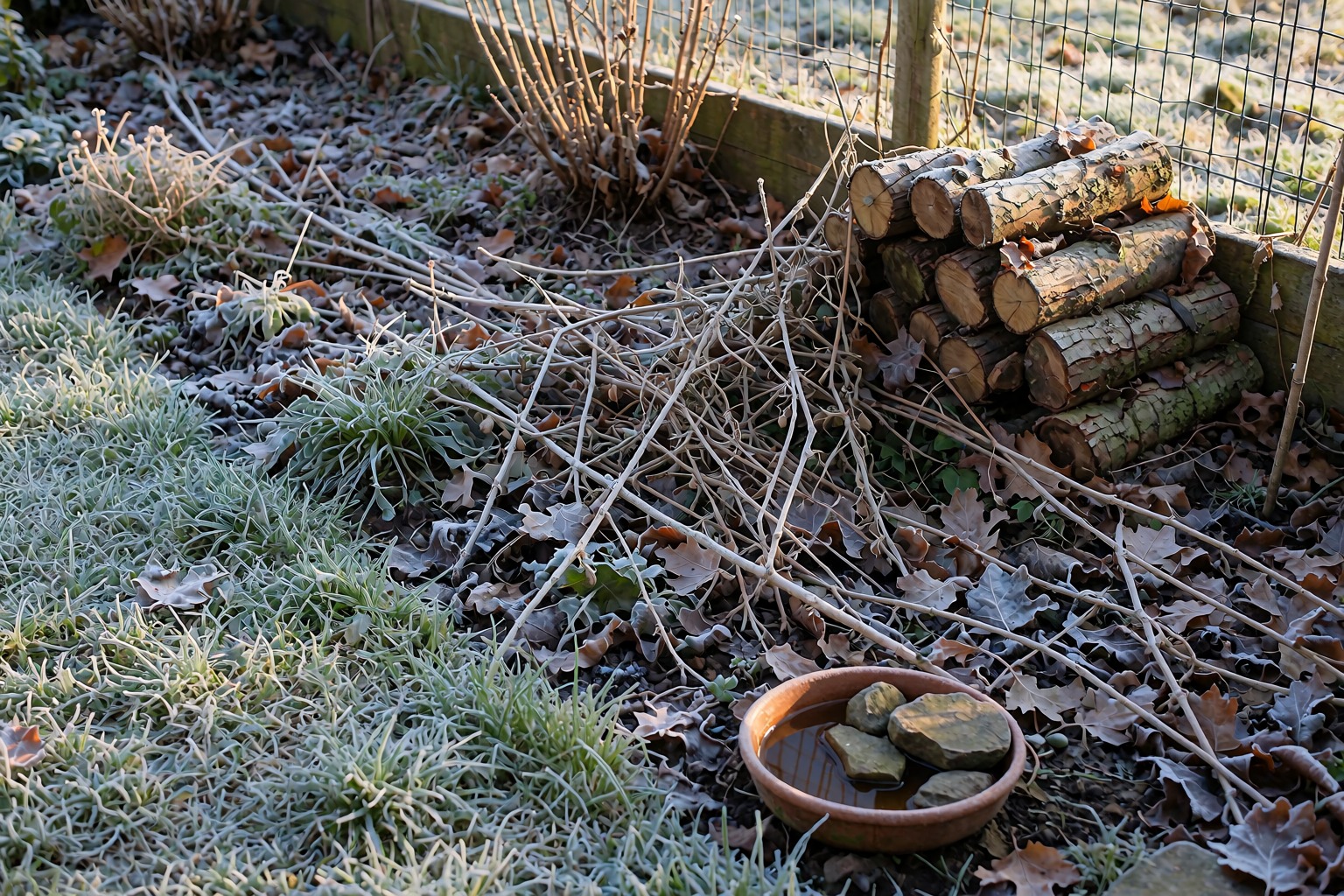
The most useful thing in a winter garden is often the thing nobody tidied. The Bumblebee Conservation Trust points out that new bumblebee queens look for small, sheltered, undisturbed spots to spend winter, things like the base of a hedge, a pile of leaves, an old mole hill or a gap under a shed. If a border gets dug over in October and raked bare for neatness, any queen that had already settled there is disturbed or exposed. Leaving one corner of a border unturned, or letting a strip of long grass stand against a fence rather than cutting it in autumn, is a genuinely useful thing to do, not a sign of neglect.
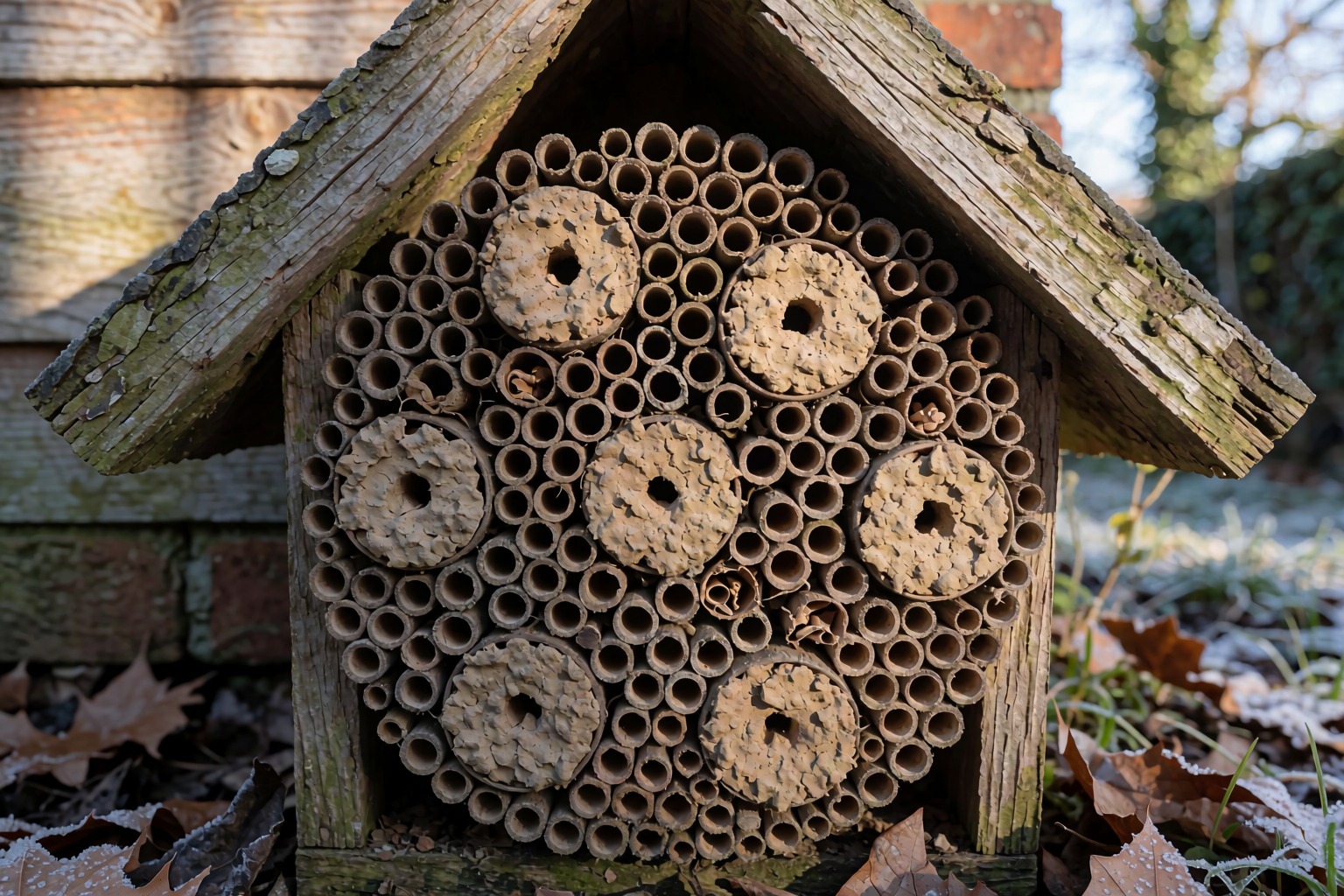
The same goes for dead wood and stems. Many solitary bees, including mason bees, nest in existing cavities rather than digging their own, so an old bramble stem, a hollow dried stalk left standing from last summer, or a small stack of untreated logs tucked against a wall can be the difference between a nest site and none. The RSPB’s advice for autumn tidying is the same for bees as it is for most garden wildlife: cut back what blocks a path or looks actively diseased, and leave the rest until spring, when it is easier to see what is actually doing a job and what is not.
None of this needs a special structure bought for the purpose. A compost heap left undisturbed over winter, a log pile that has been there two years already, or simply not strimming a patch of rough grass until March, does the same work as anything built specifically to attract bees, and does it for free.
Water matters more than most people expect
On any mild, dry day in winter, honey bees will leave the hive briefly, partly to keep the stored honey from fermenting with too much moisture and partly because a short flight lets them void waste they would otherwise have to hold inside the hive for weeks. The British Beekeepers Association notes that bees need access to water even outside the main season, and a dry spell in a cold winter can leave them without an obvious source nearby. A shallow dish of water with a few flat stones in it, so a bee can land and drink without the risk of falling in and chilling, sitting somewhere sheltered from wind, is a simple thing to put out and check occasionally. It costs nothing and it is one of the few jobs that genuinely needs doing by a person, since a garden rarely provides this kind of safe, shallow water on its own in winter.
Flowers either side of the gap, not flowers all winter
There is no single flower that feeds bees right through a British winter, and anyone promising one is overstating it. What a garden can realistically do is soften both ends of the lean period: give something late into fading autumn, and something very early before the main spring flush arrives.
Ivy is the obvious one at the autumn end. The RSPB and the Bumblebee Conservation Trust both point to ivy as one of the last reliable nectar and pollen sources before winter sets in properly, flowering into November in a mild year, which matters because it is often the final proper feed honey bees and late bumblebees get before the cold arrives in earnest. Leaving an established patch of ivy on a fence or wall, rather than cutting it back hard in October, is a genuinely useful decision, not a cosmetic one.
At the other end, the earliest flowers of the year matter disproportionately, because they are feeding a colony or a lone queen that has just used up most of its winter reserves. Snowdrops and crocuses pushing through in January and February, winter-flowering heathers, and hellebores, which can flower from midwinter in a sheltered spot, all give something to a bee on the first mild day it ventures out. Mahonia, which flowers through the coldest months and has a strong scent specifically to draw in whatever pollinators are moving, is another the Bumblebee Conservation Trust lists among the more useful winter shrubs for exactly this reason. None of these need replacing or heavy maintenance. Planting a few corms of snowdrop or crocus under a tree, or leaving an existing mahonia or winter heather where it is rather than pruning it back before it flowers, does the job.
What not to do, and why it is worth saying
A few habits that feel tidy or responsible actually work against bees in winter. Cutting all dead stems and long grass right back in autumn removes the nest sites described above before anything has a chance to use them; the National Bee Unit’s BeeBase guidance for beekeepers, and general advice from the RSPB, both point the same way for gardeners: most cutting back can wait until March without any loss, and the wait is what makes the difference.
Pesticide use in autumn is worth avoiding too, not because it is the most obvious winter risk, but because any residue in soil or on the few remaining autumn flowers can affect a queen bumblebee settling nearby or a late-foraging honey bee bringing something back to the hive. If treating a lawn or border is necessary, doing it well away from ivy, heathers or any flowering shrub reduces that risk considerably.
It is also worth resisting the urge to move or disturb anything that looks like a nest once the cold sets in. A small mound of loose earth, a gap under a shed, or a stack of logs that has clearly been undisturbed for a while may have a queen or a nest of solitary bee larvae inside it already, and winter is the one season where leaving it alone matters more than inspecting it.
A short list for the next cold morning
Put together, the useful winter jobs for bees are small and few: leave one corner of the garden properly alone rather than tidied, keep a shallow dish of water topped up on milder days, let an established patch of ivy flower rather than cutting it back in October, and plant or protect a few of the earliest flowers, snowdrops, crocuses, hellebores, winter heather or mahonia, so there is something on offer the first mild day of the new year. None of it needs new planting schemes or special equipment, and most of it is really just a decision to do less rather than more between November and March. A garden that does these few things is doing as much for its bees as most gardens ever will in winter, and it will show in how quickly they are back and working once the first proper flowers of spring open.